➤Summary
Protect your brand in real time with SpoofGuard. Detect impersonation and phishing attempts before they cause harm with automated takedown.
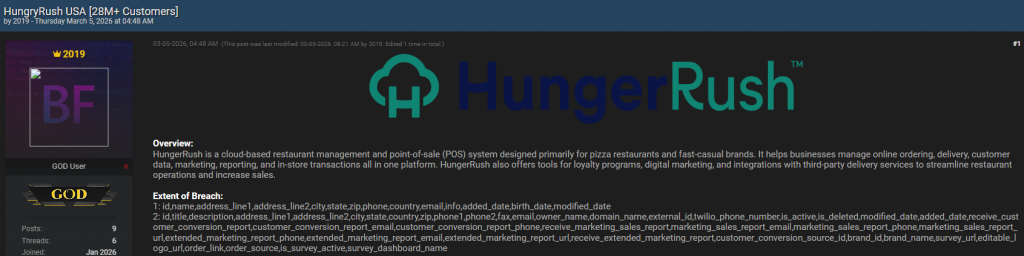
Request a demo →The HungryRush data breach has drawn significant attention after an alleged database containing more than 28 million customer records surfaced on breachforums.as. The listing, published by a threat actor using the alias “2019,” claims to include extensive personal and business information connected to the U.S.-based restaurant technology provider HungryRush. While the authenticity of the dataset has not been officially confirmed, cybersecurity researchers warn that forum disclosures alone can trigger real-world threats such as phishing, fraud campaigns, and identity targeting. 🍔
As restaurant platforms increasingly manage customer engagement, delivery logistics, and marketing analytics, incidents like this highlight how centralized service providers become attractive targets for cybercriminals. This spoofguard.io article analyzes the alleged exposure, the types of compromised data, potential risks, and defensive strategies organizations and customers should consider immediately.
Alleged Breach Overview and Timeline
According to the breachforums.as listing, the dataset allegedly contains records extracted from HungryRush systems and distributed for underground access. The post claims a large-scale database including both customer information and restaurant operational data.
Key reported details:
- Forum: breachforums.as
- Author: “2019”
- Alleged exposure: 28M+ customer records
- Data categories: personal and business operational datasets
Leak listings typically appear before verification, meaning organizations and users must treat claims cautiously while still preparing for possible exploitation.
Cybersecurity investigators often monitor underground forums because attackers use them to signal possession of data before monetization. An overview of how breach marketplaces operate can be explored via a high-authority reference from the Cybersecurity & Infrastructure Security Agency (https://www.cisa.gov).
Structure of the Allegedly Compromised Data
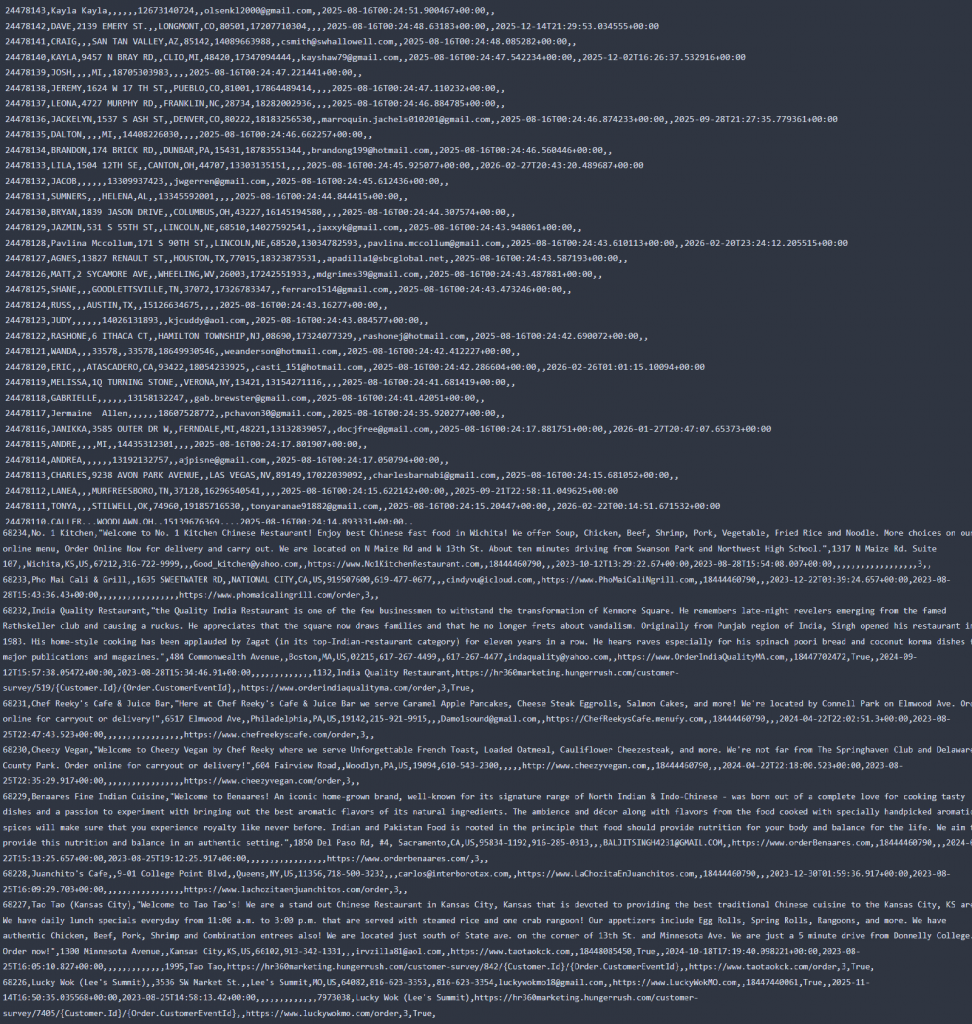
The forum post describes two main datasets containing structured relational database entries.
Dataset 1: Customer Information
Fields reportedly included:
- id
- name
- address_line1
- address_line2
- city
- state
- zip
- phone
- country
- info
- added_date
- birth_date
- modified_date
This combination represents personally identifiable information (PII), which attackers commonly exploit for targeted scams or identity profiling.
Dataset 2: Restaurant and Platform Records
The second dataset allegedly contains operational and marketing configuration data, including:
- Business titles and descriptions
- Address and contact details
- Owner name and domain name
- External identifiers and Twilio phone numbers
- Marketing report settings
- Survey dashboards and URLs
- Brand identifiers and editable logos
- Order links and source tracking
The presence of backend configuration data suggests potential exposure beyond customer-facing systems.
Why Restaurant Technology Platforms Are Targeted
Restaurant SaaS platforms aggregate massive datasets across thousands of businesses. A single compromise can therefore expose millions of individuals simultaneously.
Attackers target platforms like HungryRush because they provide:
- Centralized customer databases
- Continuous ordering activity
- Verified contact information
- Marketing automation infrastructure
The alleged HungryRush data breach demonstrates how supply-chain technology vendors increasingly become focal points for cyberattacks.
Potential Risks for Customers
If the claims prove accurate, customers could face several cybersecurity risks:
- Highly personalized phishing emails referencing restaurant orders.
- Identity fraud attempts using address and birth data.
- SMS scams leveraging exposed phone numbers.
- Account takeover attempts across reused credentials.
Threat actors often combine leaked datasets with previously exposed credentials to increase attack success rates. 🔐
Risks for Restaurants and Businesses
Restaurants using HungryRush systems may encounter operational risks:
- Brand impersonation campaigns
- Fake ordering portals
- Unauthorized marketing messages
- Reputation damage from customer distrust
Attackers frequently exploit exposed contact data to launch convincing social engineering campaigns targeting both customers and business owners.
Question & Answer (Featured Snippet)
Is a breach dangerous even without payment card data?
Yes. Personal data such as emails, addresses, and phone numbers enables targeted scams that often succeed without financial information.
How Leak Forums Amplify Cyber Threats
Underground communities accelerate exploitation by distributing or advertising datasets quickly. Once a listing appears, threat actors may:
- Verify data samples.
- Launch spam or phishing waves.
- Sell access to multiple buyers.
- Use publicity for extortion pressure.
Security teams and digital risk analysts monitor these forums to detect early warning signals before attacks scale. 🚨
Indicators Organizations Should Watch
Businesses connected to restaurant platforms should monitor for:
- Sudden increases in phishing complaints.
- Suspicious marketing emails.
- Unknown administrative changes.
- Unexpected traffic to ordering domains.
Attackers sometimes exploit exposed infrastructure data to conduct DNS Abuse, redirecting users toward malicious ordering sites that mimic legitimate services.
Practical Security Checklist
Organizations and users should adopt the following steps immediately:
✅ Change passwords linked to restaurant or loyalty accounts
✅ Enable multi-factor authentication
✅ Monitor email communications carefully
✅ Verify order links before entering credentials
✅ Educate staff about phishing attempts
✅ Monitor brand impersonation domains
Practical tip: attackers often strike within days of breach publicity, making early awareness critical. 🛡️
Technical Impact Analysis
From a cybersecurity perspective, the alleged dataset combines operational metadata with customer records—an especially valuable combination.
| Data Type | Threat Impact |
| Contact information | Phishing campaigns |
| Business domains | Brand impersonation |
| Marketing settings | Spam automation |
| Survey links | Malicious redirects |
| Owner details | Executive targeting |
| This dual exposure increases risk compared to traditional single-table leaks. |
Role of Brand and Domain Monitoring
Security teams increasingly deploy monitoring tools to detect suspicious domains and impersonation campaigns after breach disclosures.
Organizations can explore detailed articles on phishing and domain spoofing to best practices in dark web monitoring and brand impersonation detection at spoofguard.io
Such monitoring helps detect fake websites or malicious domains created using leaked operational information.
Industry Trend: Supply Chain Data Breaches
The restaurant and hospitality sector has become a growing target due to digital transformation and centralized SaaS adoption.
Common contributing factors:
- Third-party integrations
- Cloud infrastructure complexity
- Shared customer databases
- Marketing automation tools
The alleged HungryRush data breach reflects a broader shift where attackers pursue platforms instead of individual businesses.
Expert Insight
A cybersecurity researcher summarized the trend:
“Modern attackers look for aggregation points—systems where one compromise equals millions of victims.”
This strategy maximizes return while minimizing effort, making SaaS providers increasingly attractive targets.
What Happens Next?
Several scenarios may unfold:
- Official confirmation or denial following investigation.
- Data validation by independent researchers.
- Regulatory review depending on exposure scope.
- Increased scam campaigns referencing the incident.
Users should rely only on official company announcements for confirmed updates.
Conclusion: Why Awareness Matters
The alleged HungryRush data breach underscores how modern cybersecurity incidents extend beyond technical systems into trust, reputation, and customer safety. Even unverified leak claims can fuel phishing operations and impersonation attacks that exploit uncertainty among users. Understanding how breach forums operate and recognizing warning signs empowers organizations and individuals to respond proactively rather than reactively. 🌐
As digital ordering ecosystems continue expanding, proactive monitoring, user education, and rapid incident response become essential defenses against evolving cyber threats. Staying informed remains one of the strongest protections in today’s interconnected digital landscape. 🔎
Discover much more in our complete guide
Request a demo NOW
Disclaimer: Spoofguard reports on publicly available threat-intelligence sources. Inclusion of an organization in an article does not imply confirmed compromise. All claims are attributed to external sources unless explicitly verified.
SpoofGuard detects domain impersonation and phishing threats in real time. Don’t wait until damage is done.
Request a demo →