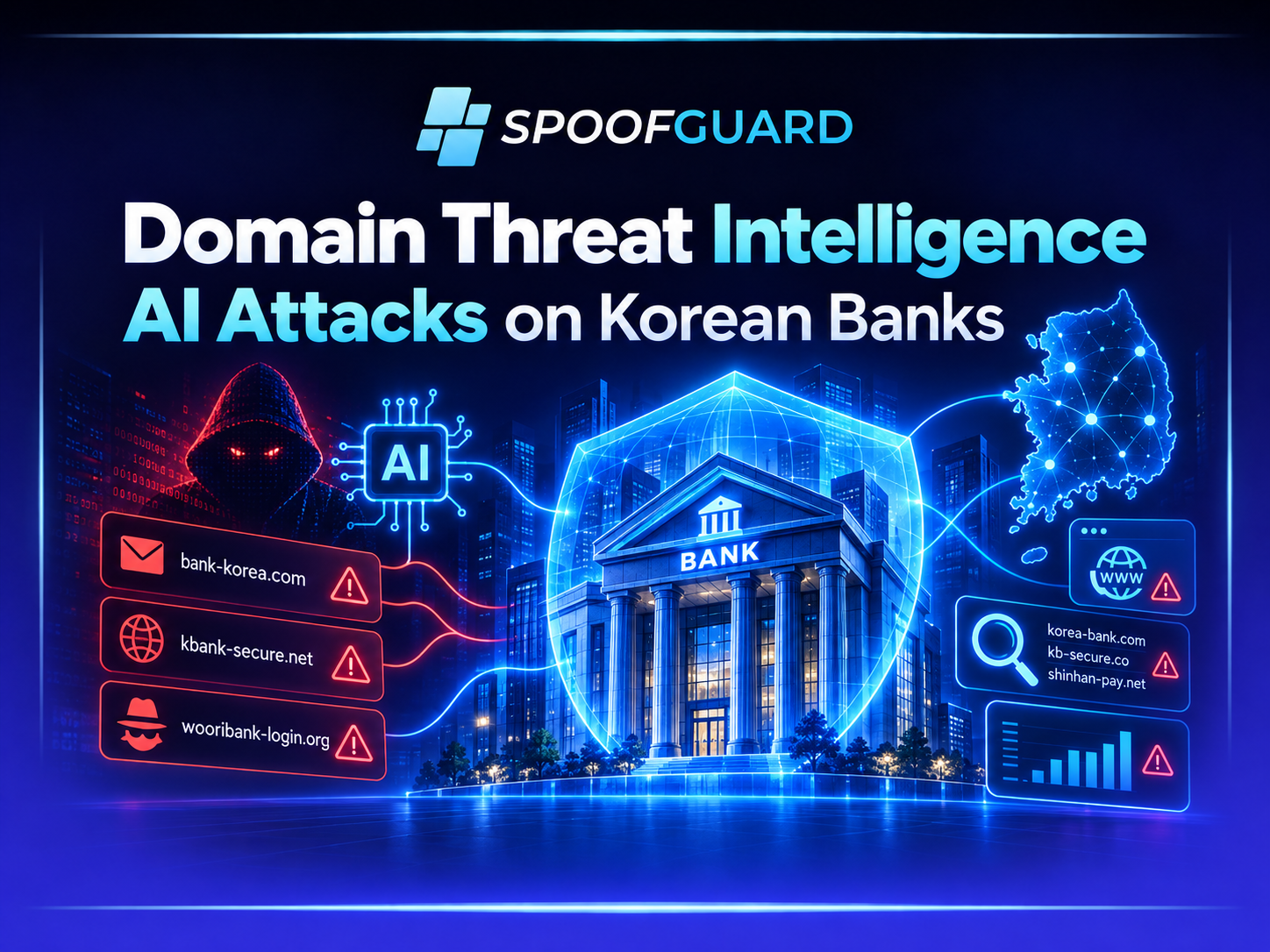
Domain threat intelligence is an important component of external cybersecurity defense as South Korea’s financial sector confronts reported cyberattacks involving ARTEX AI and Claude agents. Reporting published in October 2026 describes attacks targeting South Korean banks and raises concerns about how AI-assisted tools can support malicious cyber activity. For financial institutions, the incident highlights the need to investigate external threats, protect customer trust, and identify infrastructure that may be used for phishing or brand impersonation.
The reported activity also raises a broader question for security leaders: how can banks strengthen defenses when attackers can use AI to accelerate parts of their operations? The answer involves more than monitoring internal networks. Financial institutions need coordinated visibility across identity systems, endpoints, internet-facing assets, and the external domains that customers trust when accessing banking services.
What Happened in the Reported Attacks on South Korean Banks?
According to BleepingComputer’s report on ARTEX AI and Claude agents, a threat actor reportedly used ARTEX AI alongside Claude agents in cyberattacks targeting South Korean financial institutions.
The reporting describes the use of AI-enabled tooling in offensive activity. ARTEX AI was developed as a security-oriented tool, illustrating a recurring cybersecurity challenge: technology designed for legitimate testing can be repurposed for unauthorized operations.
The incident has attracted attention because AI agents can assist with multiple stages of technical work. Depending on their configuration, permissions, and connected tools, agents may apply brand abuse detection through analyze information, organize findings, or automate portions of a workflow via Spoofguard. These capabilities can also create risks when placed under the control of a malicious operator.
The distinction between reported activity and independently established facts remains essential. Security teams should rely on authoritative updates for confirmed incident details, affected systems, the extent of data exposure, and attribution. They should not assume that every reported attack involved the same tools or techniques.
For South Korean banks, the immediate priority is to assess exposure, validate security controls, and determine whether related activity affects customers, employees, suppliers, or digital banking channels.
Why AI-Assisted Cyberattacks Matter to Financial Institutions
AI does not eliminate the need for access, infrastructure, or exploitable weaknesses. However, it can help an operator perform certain tasks more efficiently, potentially reducing the time and expertise needed to carry out parts of an attack.
Financial institutions should consider several risk areas:
- Faster reconnaissance: AI-assisted workflows may help organize publicly available information about an organization, its technology, and its external services.
- Automation at scale: Tasks that previously required substantial manual effort may become easier to repeat across multiple systems or targets.
- More convincing social engineering: Generative AI can help produce polished messages that imitate business communication, customer support, or financial services.
- Expanded investigative complexity: Defenders may need to correlate activity across identity, endpoint, network, cloud, and external threat-intelligence sources.
- Potential brand abuse: Attackers may exploit customer familiarity with a bank through fraudulent websites, misleading domains, or impersonation campaigns.
These are broader defensive considerations, not proof that every technique was used in the reported South Korean incidents.
For banks, the central concern is the combined effect of automation and trust. Customers routinely rely on familiar domain names, mobile banking services, payment notifications, and email communications. A convincing impersonation attempt can create fraud risk even when the legitimate bank’s core infrastructure has not been compromised.
How Domain Threat Intelligence Supports Bank Security
Domain threat intelligence helps organizations discover, assess, and monitor internet-facing domains and infrastructure that may be connected to phishing, fraud, or brand impersonation. For financial institutions, it provides an external perspective that complements internal security monitoring and incident response.
A bank may have strong endpoint protection and authentication controls while criminals independently register a domain resembling its official website. That domain could be used to distribute fraudulent banking notices, impersonate customer support, or direct customers toward a fake login page.
A structured domain intelligence program can help security teams identify and investigate these external risks before assuming malicious activity has been established.
Key capabilities to consider include:
- Lookalike domain discovery: Identify domains that resemble official banking names, digital services, or customer-facing brands.
- DNS and infrastructure monitoring: Investigate changes in DNS records, hosting, and related infrastructure that could indicate suspicious activity.
- Website content analysis: Examine suspicious pages for unauthorized logos, misleading banking content, unexpected redirects, or credential-collection forms.
- Certificate intelligence: Review relevant TLS certificate and Certificate Transparency records for additional evidence about potentially suspicious domains.
- Threat scoring and prioritization: Combine domain similarity with observed behavior, infrastructure indicators, and external intelligence to determine which findings need urgent investigation.
- Evidence collection and response: Preserve relevant observations and coordinate with security, legal, fraud, and abuse-response teams.
SpoofGuard describes these types of domain discovery, monitoring, analysis, and response workflows in its domain threat intelligence technology overview. These capabilities address external domain risks rather than replacing the controls needed to protect a bank’s internal environment.
How AI-Assisted Attacks Can Increase Brand Abuse Risks
AI-assisted cyberattacks and brand impersonation are distinct threat categories, but they can intersect during a broader fraud campaign.
An attacker seeking to exploit customer trust may use automated tools to research a financial institution, identify public-facing services, or organize information for a targeted operation. A separate step could involve registering a lookalike domain or distributing a fraudulent message. Whether these activities are connected must be established through evidence, not assumed from the presence of AI tools alone.
For South Korean financial institutions, relevant warning signs include:
- Newly registered domains that closely resemble the bank’s legitimate domains.
- Websites using banking logos, product names, or corporate branding without authorization.
- Suspicious login pages or forms requesting banking credentials or personal information.
- Domain or hosting changes associated with an already identified phishing campaign.
- Fraudulent advertisements directing users toward suspicious financial services websites.
- Email and messaging campaigns that reference a bank while directing recipients to unrelated infrastructure.
A lookalike domain is not automatically malicious. Legitimate businesses may use similar names, and some suspicious domains may remain parked or inactive. Analysts should assess the site’s actual behavior and supporting evidence before classifying it as a confirmed threat.
This evidence-led approach helps prevent false positives and allows investigators to distinguish ordinary domain registrations from genuine brand abuse.
For additional operational guidance, SpoofGuard’s article on domain fraud monitoring strategies for MSSPs discusses monitoring, risk prioritization, and response workflows that can also inform enterprise security programs.
What South Korean Banks Should Do to Strengthen Defenses
Financial institutions should respond to AI-assisted threats with layered security controls, clear investigation procedures, and continuous review of their external exposure.
- Review AI-related access and security policies
Organizations using AI agents for security testing should establish clear authorization boundaries. Limit agent permissions, isolate testing environments, restrict access to sensitive systems, and retain logs of tool activity.
Security teams should review which AI services and connected tools can access corporate data, execute commands, or interact with external systems. Unnecessary permissions increase the potential impact of misuse or compromised workflows.
- Strengthen identity and endpoint monitoring
Review authentication logs, privileged access, endpoint alerts, unusual API activity, and unexpected administrative operations. Investigate anomalies in context rather than treating the use of AI itself as proof of compromise.
Maintain strong multifactor authentication, least-privilege access, timely patching, and tested incident-response procedures. These controls remain relevant regardless of whether an attacker uses AI-assisted tooling.
- Monitor domains associated with the bank’s brand
Maintain an inventory of legitimate domains and customer-facing services. Monitor for suspicious registrations, relevant certificate activity, DNS changes, and websites that appear to impersonate official banking services.
When a suspicious domain is detected, analysts should establish whether it is active, inspect its content safely, preserve evidence, and determine whether customers have been directed to it.
A domain monitoring service can help organize this work, particularly when multiple brands, subsidiaries, or regional services need protection.
- Coordinate cybersecurity and fraud investigations
Security operations teams should share relevant findings with fraud prevention, threat intelligence, customer support, legal, and communications teams.
For example, a suspicious domain discovered through external monitoring may become more significant if the fraud team independently receives customer complaints about messages directing users to that domain. Correlating these signals can help analysts prioritize investigations and support a more consistent response.
- Prepare an evidence-based takedown process
When investigators confirm that a domain is being used for phishing or impersonation, preserve relevant evidence before submitting abuse reports to the appropriate registrar, hosting provider, or other service.
Document the URL, timestamps, observed content, relevant infrastructure, and the basis for classifying the activity as malicious. Track the case through submission, provider response, and verification of remediation.
Takedown requests are not guaranteed to succeed immediately. Continue monitoring for replacement domains and related infrastructure, and coordinate customer notifications when warranted by the incident.
How SpoofGuard Fits Into a Broader Financial-Sector Defense
SpoofGuard focuses on domain threat intelligence and brand protection, making its external monitoring approach relevant to organizations concerned about phishing domains, fraudulent websites, and online impersonation.
Its published brand protection and phishing detection use cases describe workflows for discovering suspicious infrastructure, analyzing live websites, collecting evidence, and coordinating response actions.
For banks and other financial organizations, this type of monitoring can complement:
- Security information and event management (SIEM) platforms.
- Endpoint detection and response (EDR).
- Identity and access management.
- Email security and phishing detection.
- Threat intelligence and incident response.
- Customer fraud monitoring and abuse reporting.
The objective is to connect external indicators with internal evidence. A suspicious domain may be an early warning, but investigators still need to establish whether it is impersonating a legitimate institution, targeting customers, or associated with a confirmed campaign.
Organizations should also consider how external threat intelligence fits their existing operational workflows. Alerts need clear ownership, documented severity criteria, evidence retention, and escalation procedures. Without these processes, monitoring can generate findings without producing timely remediation.
For managed security service providers (MSSPs), the same principles apply across client environments. Monitoring multiple customer brands requires reliable asset inventories, context-aware prioritization, and reporting that distinguishes suspected abuse from confirmed malicious activity.
Frequently Asked Questions
What is domain threat intelligence in banking?
Domain threat intelligence is the collection and analysis of information about internet domains and related infrastructure to identify potential cybersecurity risks. In banking, it can help uncover lookalike websites, phishing infrastructure, suspicious DNS changes, and attempts to impersonate legitimate financial services. It complements internal monitoring by providing visibility into external threats that may target customers and the institution’s brand.
Did AI agents cause the reported South Korean bank attacks?
BleepingComputer reported on October 10, 2026, that a threat actor used ARTEX AI and Claude agents in attacks targeting South Korean banks, citing findings from CrowdStrike. Reuters also reported on the campaign and ARTEX’s subsequent move to closed-source development. These reports support the use of the tools in the reported activity, but individual technical details and attribution should be assessed against the relevant investigation findings.
Can domain monitoring prevent AI-powered cyberattacks?
Domain monitoring can help detect suspicious external infrastructure, including domains that impersonate a bank or host suspected phishing content. It cannot prevent every AI-assisted attack or replace endpoint protection, identity security, network monitoring, or incident response. Its value lies in identifying and investigating external threats that might otherwise remain outside an organization’s direct security telemetry.
How can banks detect fraudulent domains targeting customers?
Banks can monitor domain registrations, certificate records, DNS changes, website content, and relevant threat-intelligence feeds. When a candidate domain appears suspicious, analysts should verify its activity, investigate potential brand impersonation, preserve evidence, and correlate findings with fraud reports or internal security alerts. Domain similarity alone is insufficient to classify a website as malicious.
Strengthen Visibility Into External Threats Targeting Your Brand
The reported attacks involving ARTEX AI and Claude agents underscore the need for financial institutions to review both their internal security controls and their exposure beyond the corporate network. Domain threat intelligence can help security teams identify suspicious external infrastructure, investigate potential brand abuse, and coordinate evidence-based responses. Explore SpoofGuard’s domain monitoring and brand protection capabilities to assess how external domain visibility could complement your existing cybersecurity and fraud prevention program.
Disclaimer: Spoofguard reports on publicly available threat-intelligence sources. Inclusion of an organization in an article does not imply confirmed compromise. All claims are attributed to external sources unless explicitly verified.